Friday, July 22, 2022

Flying Saucers

 It's summertime so let us talk about one of my FAVORITE games that is a quick set up and quick implementation. I call it flying saucers and it works cross age groups and can be adapted easily to give a challenge if needed.  

1) Each athlete gets a frisbee (on a cheap budget? Grab some paper plates instead)

2) Place the frisbee upside down on one hand

3) Keep your frisbee while trying to knock over everyone else's frisbees

4) Once out, they can do 10 jumping jacks and hop back in


END when they start to get tired! 


But for real, super easy! You can easily adapt it to make it more challenging if you need. Instead of just running to knock over, you can make them crawl, jump, skip, hop, etc. Instead of flying saucers, you can change them to fit whatever your theme is too.  Happy playing and good luck!


Tuesday, May 24, 2022

10 Reasons Why Your Preschooler Should Do Gymnastics


1) Gymnastics promotes playground readiness in a safe environment. As a preschool mom myself, the ability to trust that my kiddo can climb (and/or fall off safely) the play structure with confidence without me having to be there every step of the way. Gymnastics teaches those fundamental coordination and strength skills to get them ready to play! And as a bonus, my kiddo also has the CONFIDENCE to do those things independently because she has practiced in the safe gymnastics setting.

2) Your preschooler learns focus! Trying to get from one end of a beam to the other without falling off requires focus. Learning to remember stations requires focus. Staying and working on the same thing for more than one turn requires focus. Making even one correction requires focus.

3) Gymnastics leads to reading readiness. Anytime you’re teaching eye tracking skills, it helps develop the skills required to lead to reading!

Crawling, hanging on a bar and scooting your hands, tossing and catching a scarf… even the many many drills your preschool coaches set up where a preschooler is in support on their hands and watching what their hands are doing, all lead to reading readiness.

4) Preschoolers get to learn from someone other than family!
I can't count the number of times I have mentioned to a preschooler to get their shoes on, or make their bed when they get home, or help mom fold laundry, and because I am the gymnastics coach, the kid follows through in a way that they may not normally with their family. I mean, even two weeks ago an adult figure in my kid's life suggested that she do her own laundry for mother's day and what a gift that was to me! It takes a village and a gymnastics class can help provide another adult figure at a young age to your child's life.
In addition, it starts to get them ready to learn from an authority figure in a more classroom setting. It can help prepare their minds for their future learning environments of school. Learning to listen to instructions, follow the leader, receive corrections and compliments all can be learned in a gymnastics class.

5) Preschool gymnastics helps provide social readiness. So often, lesson plans require teamwork, partner stations, taking turns, etc. that help teach those necessary social skills for kindergarten. Kids learn conflict resolution, kindness, patience and more through preschool gymnastics programs. WHICH IS ESSENTIAL IN THIS COVID WORLD. These kids need the interactions, the time with peers and the instruction from an outside adult to help prepare them for life.

6) Gymnastics teaches resilience. Kids will fall. Kids will not be able to do the station on their first try. They will learn to get back up, to try again, and to ask for help. It teaches a tenacity and grit in a relatively safe setting where they CAN fail.
I mean, the movie Stick It says it best:
"Gymnastics tells you 'no' all day long. It mocks you over and over again, telling you that you're an idiot. That you're crazy... If you like falling, then gymnastics is the sport for you! You get to fall on your face, your butt, your back, your knees and your pride! Good thing I didn't like falling. I *loved* it".

7) Preschool gymnastics leads to sports readiness. Footwork, Hand eye coordination, flexibility, strength and conditioning, etc. all lead to eventual sport prowess. I had teammates to go on to compete gymnastics, but also pole vault, diving, soccer, crossfit, kickline and more in college. It lays a foundation for sport movement that provides them the opportunity to excel down the line.
What are some sports that you have seen gymnastics lay a foundation for?

8) Gymnastics enhances proprioception, sometimes referred to as the 6th sense. Athletes are able to more fully develop a sense of where their body is and how their body is in relation to things around it.
Got a kip tripping all over the place? Put them in gymnastics. Got a kid who confuses left and right? Put them in gymnastics. Got a kid who has trouble skipping/jumping rope? Put them in gymnastics. Even if it's due to developmental delays, gymnastics acts hand in hand with occupational therapy to help develop proprioception (Fun fact! Several of my former teammates have gone on to study and become occupational therapists themselves).

9) Preschool Gymnastics creates health readiness. What do I mean by that? It creates a love for being active, for exercising, for setting goals and striving to achieve them. The foundation that gymnastics builds helps to create more healthy kids and adults!

10) Last one and best one. GYMNASTICS IS FUN!!! Preschoolers love to make new friends, see the colorful set ups and move their whole bodies in the gym. Playing games, accomplishing new skills, learning and so much more lead preschoolers to ask each morning..."Is it gymnastics day?"


Wednesday, December 20, 2017

Stall Bars

These things are so underrated for use in recreational and preschool gymnastics!  So many great things and skills can be learned in such a small space.


For example, it makes a fantastic parent tot station teaching climbing up, and down.  You can also adjust and use mats to prop up at an angle as a slide down option.  These normally cost like a thousand bucks with shipping from gymnastics equipment companies.  Amazon has them here for $179.97 with PRIME!  What a steal!  Not only does it work grip strength, but also works on conquering fears and coordination.  It can also work as monkey bar prep ;)

Saturday, January 23, 2016

The First Follower

How to run a preschool class:


Love love love this.  You can be the lone nut preschool teacher (which I have seen my fair share of).  But the BEST teachers, are really the first followers.  The ones who beckon their friends to join.  Who find a way to include everyone.  Make your classes into preschoolers full of first followers.  That first follower will save your class :)

Saturday, November 28, 2015

The Don'ts (per USAG)

Hi Ya'll!  Hope you had a great Thanksgiving!


I have been to quite a few trainings through USA Gymnastics (which I highly recommend!).  In these courses, they would go over skills and drills, in addition to certain skills to avoid.  They were super enlightening as many of the skills to avoid are things you often see in classes, including PE classes at schools!

Here are a few of the things I have learned:

1)  I did a blog post a while ago covering the forward roll and tonic neck syndrome.  You can see that post HERE!  

2)  Frog jumps are a negative!!  Especially for preschoolers!  Especially because they can't do them correctly.  Here is a correct video for older gymnasts...but most youngers when they copy will have their booty either up high in the air, or it will be close to the ground with their knees over bent.

https://www.youtube.com/watch?v=NSPy43tX8e4


3)  Along with the frog jumps...please watch out for W sitting children!  Super bad for knees!

4)  Back bend/bridges.  These used to be an absolute NO-NO in USA Gymnastics.  More recently, it's been clarified to be a "be careful and don't overdo it."  I maybe do bridges with my 3-4 year old class once or twice a month.  And with those, they are always unassisted (so only as far up as they can go on their own).  This is fairly typical.

5) Hyper extending the back is a NOOOOOO.  Now, you may think that this is the same as a bridge, but there are two main ways to avoid for hyper extension of a preschoolers back.  First, is the fancy rhythmic looking move that I don't know the name for.
And one that is less known as being bad is what is typically known as a pike stretch.  The way to fix this for younger ones is to not force pikes for one, and for two, try to teach it with a flat back where they stretch up tall first and then keep as flat a back as possible as they go down.

6) And last but not least is for the little ones.  When I was growing up, I remember seeing pictures on the TV of Dominique Moceanu as a baby hanging on a clothesline.  Something like this:

This one is good though, cause he has the parents supporting him under his arms.  Children under the age of 18 months are not supposed to hang unassisted from their hands.  Whether off a bar, clothesline or rings, Doctors have clarified for USA Gymnastics that children's shoulders at that age are not developed enough to do that safely.  

Those are the main ones that I make sure to teach my new preschool staff and new parent-tot parents.  Let me know if you have any questions about it!


Sunday, November 1, 2015

Tumble Trak

There are several ways to run a preschool tumble trak rotation!  One is with stations like this video.  Now, I have a couple issues with this , and I will be going over further explanations in future blogs.  

First, I ALWAYS teach preschoolers and beginners to jump with their arms down instead of up by their ears.  Yes, eventually they will need to learn arms up, but as you notice here, this child is above average in ability for preschool, yet she still cannot keep her tummy tight and her head neutral when jumping, which can be super dangerous!

Second, NO SEAT DROPS!  It's bad for a preschooler's back and the chance of them learning correctly and putting their arms by their knees every time instead of behind them is very slim!  :)

I also like to use the edges for teaching my classes.  Stand on red and balance on one foot, then hop to to feet on the trampoline and rebound stick.  (teaches hurdles)


I still do some passes down the entire tramp with my classes!  (even my parent-tot classes).  For long tumble traks, I always cut it much shorter though.  Have a specific place where the kids wait for their turn to go so that there is never more than one at a time traveling down the trampoline.  Then, when doing traveling, always make sure there are appropriate stations on the way back.  Make it an obstacle course! 

For example, if I have 12 kids in my parent and tot class, I make sure that there are 10 additional obstacle stations on the way back to the waiting station.  (and I have heard many an argument against waiting stations but I think they are SUPER helpful).  Not for five kids to be sitting at.  If you have more than one kid sitting then something is wrong with your obstacle course.  I think it is important for students (even toddlers) learn the importance of waiting for their turn and listening for their coach to say their name for their turn (for safety and for the coach/toddler interaction)


Make it a different jump every time around the obstacle course for ages 3+.  For those toddlers, make it a different jump every week.  I also include running as a travel type.  I also will draw (or have one of my more artistic coaches draw) stations that the kids will do a certain kind of jump at.  Example:  for frozen week, we drew 3 snowflakes on the tumble trak.  They would straight jump down to the snowflake, and then get stuck in a blizzard and try a jump spin stick to get out, then onto the next snowflake.  

Hopefully these ideas are being helpful!  I have had a couple other request for topics that I am slowly trying to get through.  Please let me know if you can think of anything else :)


Thursday, October 8, 2015

Trampolines Galore!

Hi all!

One of the things that make parents most nervous about the sport of gymnastics is the dreaded Trampoline.  However, one of the things that make kids most excited about gymnastics is the funtastic TRAMPOLINE!

Now, what to do with a trampoline.  The first and most important part of teaching trampoline is how to land safely!!!  One person at a time on a trampoline.  I start with most of my kids on mini trampolines and make sure they know how to control their bodies on there before I take them to our larger above ground web-based trampoline.  


Starting with teaching different types of jumps, straight, tuck, straddle, pike, split, jump 1/2 turn.  Personally, I don't move past those 6 skills for a LONG time.  Maybe one day I will introduce a seat drop on a large resi mat.  But even that I don't introduce until I have already got them on the large trampoline mastering the first 6 skills.

Once they get to the large trampoline, I set up side stations for my class to do while I am working with one student at a time on the trampoline.  Ideally, your gym will have an in ground trampoline like the one below.  

Mine unfortunately, has an above ground trampoline at this time.  

A sample first class set of stations for a beginners class- (our beginner classes are capped at 8 kids)
Station 1: One partner on trampoline with coach, one partner practicing the sitting position of whatever kind of jump you are working on.
Station 2: Safety falls!  If you have those mini cheeses, set up two, one for each partner.  If you only have a larger cheese, then make sure to set up a spot in front of each side for each partner to start on (we use carpet squares)
Station 3: Stick positions!  Set up a larger block (relative to kid size-no higher than waist height with a soft landing mat).  Jump to stick position and hold 3 seconds.
Station 4: Handstand work on the wall.  I set up a variety of different kinds of handstand work and drills for against the wall.  If you don't have that kind of space near the tramp, I would suggest basic skill work they can work on perfecting (ie. forward roll with a bean bag in between knees)  If you are extra limited on space, make this station a conditioning or stretching station depending on what your students need.

Sidewalk chalk works great on trampolines!  Use it to mark starting spots.  


The next blog I do will be on Tumbl Traks and how to adapt our lessons for the longer trampoline.  Keep your eyes out!

Sunday, September 13, 2015

Little Red Block


This little tool is one of my favorites from preschool! You can get a mat just like this from most gym suppliers.  I love it much better than the old flat cartwheel mat that used to be used to teach cartwheels.  I use it for cartwheels, but also for almost every skill!  Here are just a few of the things I use it for in classes:


It also makes a get step stool for the extra little ones for bars, beams, etc. 

Monday, September 7, 2015

Tony Chestnut

Welcome to my favorite alternative head, shoulders, knees and toes!  

I sing the song normally, but I won't make you suffer through that.  I sing and act it out very slowly for my parent-tot classes.  You will be surprised how many pick it up fast!  Make sure you practice, practice, practice before you sing with a class (especially with parents!)


I also love to use this one for my school-aged field trips.  It is a great gathering time activity when we switch from one activity to another.  I gather them with the song (do it one time slow, and then one time fast to challenge them).  Once they have sung, the attention is on you and you have time to explain the rules of the next activity.

Thursday, September 3, 2015

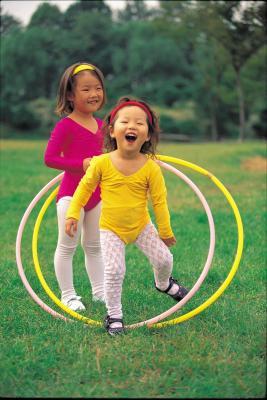
Hula-Hoops without Hula-Hooping!

I am going to post a couple videos that have some great ideas of things that you can pull and use at home or at the gym to incorporate hula-hoop!  Most kids these days actually don't even know how to hula-hoop so these can be great introductions to them.

Video One:


Now, most gyms won't have bleachers, but I love to tie the hula hoops to different areas of my gym to make baskets and targets.  You can tie them between parallel bars, hang them from the bars or beams, etc.  I always make sure to emphasize that these skills build to bigger gymnastics skills later!  They not only help with hand eye coordination, but they also build grip strength for bars.
Most of the basketball/baseball games they describe will be too much for a preschooler though in this video, but you can for sure do those with your school-aged kiddos!

Video Two:


I liked this video because it goes over fun ideas on how to actually teach hula-hooping.  Again, more for school-aged.  With hula hoops on the ground, you can also do musical chairs but with hula hoops using different ways to go around as she demonstrates.

Now, for those preschoolers (and parent-tots), here are some of my FAVORITE grab and go activities!

1)  FETCH!  Have grown-up or coach just roll the hoop and kiddo has to run (or skip, or gallop) to go catch it and bring it back!  For more of a challenge, kiddo needs to catch up and go through the hoop while it is moving!

2)  Hoops make great boundaries!  Set up a station inside your hoop!  Grip changes for bars holding the side of the hoop, stretching inside, push-up hold inside, etc.  It works even better if you have those velcro arrows or lines so that you can stick the hula-hoop to the ground.  It takes away the temptation that most kids will have.  

I also use the hoops as a transitional tool sometimes.  It turns into our space ship and everyone has to grab hold as we travel to our next station.  Helps to keep all your kiddos with you!


3)  Spin and stick!  I do this one sometimes for warm-ups and vaulting stations.  I spin or toss the hoop and the student needs to run and jump into the middle and show me their "stick-it position".  


4)  Through the tunnel!  Have a friend hold it while you go through.  Remember that importance on crawling?  Try to emphasize those crawling moments!  For parent and tot classes, I will line up the parents with their hoops so that there is a tunnel of hoops for the tots to go through.  


Do you have more ideas of things to do with hula-hoops?  Do you have something else you would like some extra ideas on?  Feel free to email me at anniegymfinity@gmail.com

Thursday, June 25, 2015

Ring around the Rosie

I used to hate this song.  I was a history major in college and so this song is a little perverse for me.  But then I was teaching at gym and the coach there (Miss Deborah) did this song with her littles and did the second part that I had never heard before.


Ring around the rosie, (hold hands in circle and skip around)
A pocket full of posies,
Ashes, ashes, we all fall down! (sit down)
Cows are in the meadow,
Eating buttercups,
Thunder,(pound the floor with hands) Lightning, (clap your hands)
We all stand up! (stand back up)

Great transition activity, social activity, ending time, gathering time, etc.  I've started doing this one with ages about 18 months and up.  They won't sing along yet, but they absolutely love to play.

Sunday, June 7, 2015

Caterpillar

I had the privilege of going to a gymnastics educational clinic yesterday!  I love love love learning more about the sport from people who have been in the industry and have so much knowledge that they want to share. 

One of my favorite things about going to these clinics is being reminded of drills/games you haven't used in a while.  Such is the case with the lovely caterpillar.


One person kneels down to crawl.  Another person gets behind them and grabs their ankles.  Then they both try to crawl together to get from point A to point B.  I have used this one in parent/tot classes, all the way to team.  For parent/child classes, take turns having the parent or the child be in front.  You can vary it up by having them caterpillar up/down a cheese, across a zig zag, etc.   For team I adapted it so they need to be in a push up position and make it a longer line with more people.


Friday, June 5, 2015

Gymnastics for boys?

Most gymnasts are girls.  I have only coaches at one gym where it is closer to probably fifty fifty in terms of boys and girls enrolled in gymnastics classes.  

I would like to put forth the argument that boys and girls should both be enrolled in the sport as they develop...and then can choose to go separate ways as they get older.

I mean, did you ever go to those dances and see those cool break dancers?  The best ones I ever saw at any dance were all former gymnasts...who learned the skills at the gym.  I mean, check out this Olympian breakdancer?


I start them smaller.  I do ALOT of obstacle courses with boys, even into grade school aged.  I coordinate some "parkour" skills mixed with correct gymnastics and form skills.  When I say parkour, I mean something fun like this that is SAFE and controlled, but also let the boys get out some of their energy.


All my preschool classes work on all the different gymnastics equipment.  Keep them all involved and build your program for both genders!  And help your little superhero by enrolling them in a class that will help them develop athletically, cognitively and socially! :)

And I'll leave one of my favorite pictures of the USA Gymnastics Men's team for you 


Thursday, May 21, 2015

When should I put my child in gymnastics?

I have had my parents in town visiting for the past week.  As part of their visit, they have stopped by to see me work.  After watching one of my classes, my mom made a comment along the lines of "Wow!  You really have those kids down to a routine and they follow directions and behave so well!"

It really made me think.  I often get the question of what age should my child start gymnastics or why would I put my child in a gymnastics class so young?  My answer to what age: As soon as you can get them enrolled in a quality program!  Wait until you have the right teacher and gym to fit your family, but then take them as soon as possible.  Try some places.  See what works.  

I've started classes with as young as 15 months where we start with activities as simple as ones like this:


They become accustomed to being outside the home, away from mom/dad and starting to explore the fun things a gymnastics facility has to offer.  They overcome fears and try new things while building manipulative skills.  I also work with beginner kids from junior high (I have even done classes with beginner adults!) who greatly benefit not only from the exercise, but the confidence building, and friends they make in class.  Whatever the age, get them started!

NOW.  The big one.  I am friends with a lot of young moms.  My siblings and in-laws  all have little kids.  There are lots of young moms at my church.  "My child is too young for a sport, especially gymnastics.  They won't really do anything.  It's a waste of money and time."  Why oh why should you put your child in gymnastics class when they are 16 months....18 months...2 years....3 years...?  

1.  Sociality.  I made up the word, but I think you can catch my drift.  They learn to play nice with kids, how to wait their turn, how to listen to a coach, how to stand in line, etc.
2.  A non-family adult role model for your child.  "Coach Annie would be so sad to hear that you didn't eat your vegetables at dinner.....Coach Annie wants you to go to bed so you can wake up and play with her tomorrow...."  It works.  Sometimes having that outside family figure is just what it takes to reinforce good behavior.
3.  Manipulative skills!  Gymnastics leads to betting reading skills, specifically due to the manipulative skills we teach in classes.  Eye tracking teaching body awareness and trains the mind in a way most schools can't.
4.  How to set goals, 
5.  Build self esteem.
And my favorite:
6.  How to do gymnastics safely.  They start with rolls, hanging on the bar, walking on a beam and jumping on a trampoline and before you know it, they are tumbling, flipping on the bars, leaping on the beams and sticking their landing on the vault.  The little drills lead to the big skills when done in a safe progressive manner.  (Again, finding the right gym with the right coach)


Most gyms will offer a free trial class.  Find a certified USAG club near you through usagymclub.com.  See you at the gym :)

Saturday, May 9, 2015

HELP! I can't breathe!

Have you ever wondered why this is all the student will do??  


Or they pull this lovely one?? (please please please if you are taking your child to a gymnastics facility, take them to a USA Gymnastics certified gym with certified coaches!)


I've even seen older kids do it.  I mean, we've all seen it.  The coach or parent just putting/forcing their kid through the motions.  There's this fancy term called tonic neck reflex, which all humans have.  It is a primitive reflex, which occurs because the baby's head is large and their neck is small.

Forcing a child to tuck their head under, will make them naturally snap their head back up.  Why? Because it cuts off their airway!  Wouldn't that freak you out too!  It's not natural to want to do that.  

So when they are ready, they will start to investigate.  Show them the steps, but don't force.  Look at my previous post for my quick steps to a proper somersault.  :)

Friday, May 8, 2015

8 steps to start your flipping

Here's a first skill tutorial!  
Somersaults (also known as forward rolls) are the core of ALL gymnastics.  They teach all the basic movements that lead to those bigger and fancier skills.  

Please understand this image is not perfect, and I would teach it slightly different, but it breaks it down into more steps than most, which I like.


1)  Start in a stretch position.  I always start teaching them on an incline like these ones.  They stand at the top of the incline facing down.  Really any size works.  I use the tiny ones for my older students too.  


2) Hands down slightly in front of feet.  (This is where pike position flexibility is important!)  Little kids are easiest to teach pike position to start.  If it is too challenging, I have the athletes start with their knees slightly bent.  This gets their hands in the right place!  Too many beginners try to learn them with their hands way too far out.

3)  THEN, I want them to bend their legs down so they can put their head towards the floor, but not on the floor!  I just tell them to look at their belly and they tend to naturally bend their legs to do that (I guess to get a better view ;))

This is where I come in to spot beginners.  I spot naturally on the left side, so I will explain it from that side, but feel free to switch if that feels more natural.  For smaller kids, I place my left hand on their upper back/neck area and place my right hand through their middle.  My right hand then controls the speed of the rotation, while my left can help round their back and protect their neck if they decide to do something crazy.  I have seen lots of people spot by holding onto the athlete's hips, but I don't love that as you will see in the next blog post.  It does work that way with older athletes though who already understand the tucked head concept.

4)  Rotating hips to initiate roll.

5)  Rounding back throughout!  Keep looking at that tummy!

6)  Plant feet (together ideally) on the floor with hands reaching out forward in front (athletes will want to put their hands down by their bottoms to help them stand up.  I do lots of drills on how to teach them to reach up.  My favorite is just placing myself at the bottom of the incline and making them jump up to give me a high five at the end.)

7)  Rise to stand with arms up by ears.  I do a drill for this one where they sit on the edge of a block (height of the athlete's knees to begin, working lower as they get more advanced) and hold their arms straight up.  Then, I make it a race where I say go and they have to stand up and jump as fast as they can with their arms still glued to their ears.  


8)  Yell TA-DA!  Everyone likes to feel accomplished.  :)

Make it trickier and start challenging the athlete by having them do the skill with legs together and pointed toes. Then have them try it in a straddle through the whole skill (even the stand up!), or a pike to make it even more difficult (I have many a team athlete who still have trouble with that one)

Final tidbit for the day:
I tend to use a little saying that my kids can remember:  Hands up, hands down, touch the ground, tuck your head and roll.  Stand up high and touch the sky and finish with TA-DA!  I know I know, it doesn't follow any real poem format.  But kids remember it.  It works.  

Monday, April 27, 2015

Little Einsteins

I overheard a child the other day asking a question about a quote that they didn't get.  The adult the proceeded to ask how old the child was, and then said, oh don't worry about it, forget it (as in you are too young to understand so I am not going to bother to explain it to you).  I HATE THAT.  


As a coach, or parent, or adult in general, we have a responsibility to answer questions.  I know sometimes the questions seem pointless, or that they are too young to understand, but I have found that most of the time, if you take the time to make an effort to answer, they get it.

Take for example teaching a child how to climb.  You would think it would be natural instinct, right?  Just hop on up there kiddo.  Come sit by me on the couch, climb up on my bed, get into the car, etc.  But, as I'm sure you have seen, the kid takes too long and we get impatient and just say, oh they are too little, I will do it for them.  

But, if we take the minute to break it down....


Here is where it is easier to get on.  It is easiest if you roll sideways and get one leg up and use the side of the block to hold onto.  Then use your other arm to pull your other leg up with your strong muscles.  (It's the same thing for rock climbers/boulderers as they talk each other through tricky routes).  Why should we teach kids any different?

Here's to my next couple segments:  Breaking down skills so even a TWO year old can understand :)
Let me know if there is a specific skill you have troubles with!  anniegymfinity@gmail.com


Thursday, April 23, 2015

Determination

One thing I absolutely love about coaching parent tot classes is the hard work that those athletes do without anyone realizing it.  I think we see things like this video and just think about how crazy those kids are.


I mean, seriously. Crazy.  But then I think.  How many times have I seen my athletes do things like that?  Granted, the distraction factor is always there for that age, but sometimes we don't give them credit for how much they do learn and how much they stick with it.

For my parent-tot classes, we do pretty much the exact same set-up for a month.  By week three, the kids get it.  They are mastering it, and they can try harder skills.  They stick with it, even more than I think older athletes do sometimes.  And I love them for it.  

We should all learn a little work ethic from a toddler trying to get out of their crib :)

Saturday, April 18, 2015

6 Tips for Managing the CRAZIES!

We've all had those kids.  Or the good kids with those days.  Here are 6 tips for helping THAT class or lesson or day go smoothly and leaving you and them still happy.

1.  Know your students names!  How can you expect a kid to listen to you if you don't even know who they are?  They can tell when you care, and caring enough to know their name is just a start.

2.  Get your teacher voice on.  Or teacher look.  If you don't know how to do it, watch shows or examples in your life.  Learn how to say "cut it out" in a nice way that lets kids know that you are serious.  Personally, I have a look that I give.  Don't just laugh it off, but don't be mean about it!  There is a balance and it takes practice.  But practice works.

3.  Use all learning types to affirm correct behavior.  Tell them when they are doing the right thing, listen to them if they have a problem with what they are trying to do (they may be afraid, bored, tired, etc.), have them watch you or a friend do the station, or my favorite, walk them through the station!  The owner of the gym I grew up at taught me when I first started junior coaching how important it is to put your hand on a kids upper back to guide them.  Athletes tend to react better when they are placed in correct positions as opposed to being told what to do.  

4.  Always have a plan.  A well thought out and planned lesson (with back-up ideas!) goes a long way to helping class management.  Crazies can tell when you don't have a plan and they will come up with their own plot if they sense a faltering leader. 

5.  If something isn't working in the plan, change it!  Don't stay on that station if it is making you and the kids frustrated.  Try a different skill set, or an obstacle course to redirect the energy to a positive one.

6.  End on a high note.  No matter how frustrated you may be, make sure the kid still knows you care.  Express concerns if there was lack of listening and why it is important to listen in class (safety first!), but then say something along the lines of "I am so excited to do gymnastics again with you next week with your listening ears!  Can we turn them on right now for mom/dad? (go through motions of turning them on and high fives for that kinesthetic affirmation)

Have some favorite tips you like to use?  Send me an email or video at anniegymfinity@gmail.com

Saturday, April 11, 2015

Animal Action

I remember growing up in my gym and having the preschool teachers play this song on the stereo.  


It's fun for warm-ups or ending time...but I personally think it drags on and gets boring doing the same animals if teachers use it all the time!  

Animals are a great teaching tool though and here are a couple of my favorites to use and teach!

First we have our snake.  I always make sure the snake HAS to stay on a line and always has an end goal.  (those gyms that have a floor beam, the scooters fit perfectly over one of those).  In this video, we just use a regular velcro line on our floor (you can use masking tape at home!).  You also don't have to have a scooter.  Kids are just as happy to be a snake on the ground.


Then, we have our sloth!  Sloths are great gymnasts.  We do sloth holds on the bars and on the balance beams, and eventually as they get stronger, they can do sloth walks under the bars and beams.  Be careful when they are hanging upside down!  Always make sure you have a hand under the kids (especially around their heads!) to make sure they don't fall.  Watch the trainers with the sloths!


Try and get creative with the types of animals you use!  Be flamingos, crocodiles, bears, lions, cheetahs, penguins, rabbits, etc.  It makes stations easier to remember for kids and keeps their attention much better!